Why Customer Journey Mapping Is Essential for Business Growth
In 2026, businesses are operating in an increasingly competitive digital environment where customer expectations are higher than ever. People no longer interact with brands in a single step before making a purchase. Instead, they go through multiple touchpoints such as ads, websites, social media, emails, reviews, and sales conversations before deciding to buy.
Because of this complexity, businesses that do not understand their customers’ journey often struggle with low conversions, poor retention, and wasted marketing budgets. This is where customer journey mapping becomes essential.
Customer journey mapping helps businesses visualize every step a customer takes from discovering a brand to becoming a loyal repeat buyer. It allows companies to understand customer behavior, identify gaps in the buying process, and optimize every stage for better results.
In this guide, we will explore why customer journey mapping is essential for business growth in 2026 and how it can dramatically improve marketing, sales, and customer experience.
What Is Customer Journey Mapping?
Customer journey mapping is the process of visually outlining every interaction a customer has with your business across different stages of their buying experience.
It typically includes:
-
Awareness stage
-
Consideration stage
-
Decision stage
-
Purchase stage
-
Retention stage
-
Advocacy stage
Each stage represents a different mindset and set of needs.
A customer journey map helps businesses answer questions like:
-
How do customers find us?
-
What motivates them to take action?
-
Where do they drop off?
-
What barriers prevent conversion?
-
What keeps them coming back?
By answering these questions, businesses can create more effective marketing and sales strategies.
Why Customer Journey Mapping Matters in 2026
Modern customers interact with brands across multiple channels before buying.
They might:
-
See a social media ad
-
Visit a website
-
Read reviews
-
Sign up for an email list
-
Receive SMS messages
-
Talk to sales representatives
Without understanding this journey, businesses risk losing potential customers at different stages.
Customer journey mapping helps businesses:
-
Improve customer experience
-
Increase conversion rates
-
Reduce marketing waste
-
Build stronger relationships
-
Increase customer lifetime value
1. Helps You Understand Customer Behavior
One of the biggest benefits of customer journey mapping is gaining a deep understanding of how customers behave. Instead of guessing what customers want, businesses can analyze real data and interactions.
This helps answer:
-
Why customers visit your website
-
Why they leave without buying
-
What influences their decisions
-
What content they engage with
When businesses understand behavior, they can create better marketing strategies.
2. Identifies Gaps in the Buying Process
Many businesses lose customers without knowing why.
Customer journey mapping highlights gaps such as:
-
Weak landing pages
-
Confusing checkout processes
-
Poor follow-up systems
-
Lack of trust signals
-
Missing information during decision-making
By identifying these gaps, businesses can fix problems that directly impact revenue.
3. Improves Marketing Strategy
Marketing becomes more effective when it aligns with customer behavior.
Journey mapping helps businesses:
-
Create targeted content for each stage
-
Improve ad messaging
-
Segment audiences properly
-
Deliver personalized campaigns
For example:
-
Awareness stage → educational content
-
Consideration stage → case studies
-
Decision stage → offers and testimonials
This improves engagement and conversion rates.
4. Increases Conversion Rates
When businesses understand the customer journey, they can optimize every step leading to a purchase.
This includes:
-
Improving landing pages
-
Adding trust signals
-
Simplifying checkout processes
-
Creating better follow-up sequences
Small improvements at each stage lead to significant increases in conversions.
5. Enhances Customer Experience
Customer experience is a key factor in business success.
Journey mapping helps businesses ensure customers:
-
Receive timely communication
-
Get relevant information
-
Experience smooth interactions
-
Feel supported throughout their journey
A positive experience increases satisfaction and loyalty.
6. Improves Sales Performance
Sales teams benefit greatly from customer journey insights.
They can:
-
Understand customer objections
-
Personalize conversations
-
Follow up more effectively
-
Close deals faster
When sales teams know where customers are in their journey, they can provide better support.
7. Helps Build Stronger Customer Retention
Customer journey mapping does not end after purchase.
It also includes post-purchase behavior such as:
-
Product usage
-
Customer support interactions
-
Repeat purchases
-
Loyalty program engagement
By optimizing post-purchase experiences, businesses can increase retention and customer lifetime value.
8. Supports Better Personalization
Modern customers expect personalized experiences.
Journey mapping allows businesses to:
-
Segment customers based on behavior
-
Send targeted messages
-
Recommend relevant products
-
Create customized offers
Personalization increases engagement and trust.
9. Reduces Customer Drop-Off Rates
Many customers leave before completing a purchase.
Journey mapping helps identify where drop-offs happen, such as:
-
Landing pages
-
Pricing pages
-
Checkout steps
-
Follow-up stages
Once identified, businesses can fix these weak points and recover lost sales.
10. Improves Cross-Team Alignment
Customer journey mapping aligns marketing, sales, and support teams.
Instead of working separately, teams can:
-
Share customer insights
-
Align messaging strategies
-
Improve communication consistency
-
Work toward shared goals
This leads to better overall business performance.
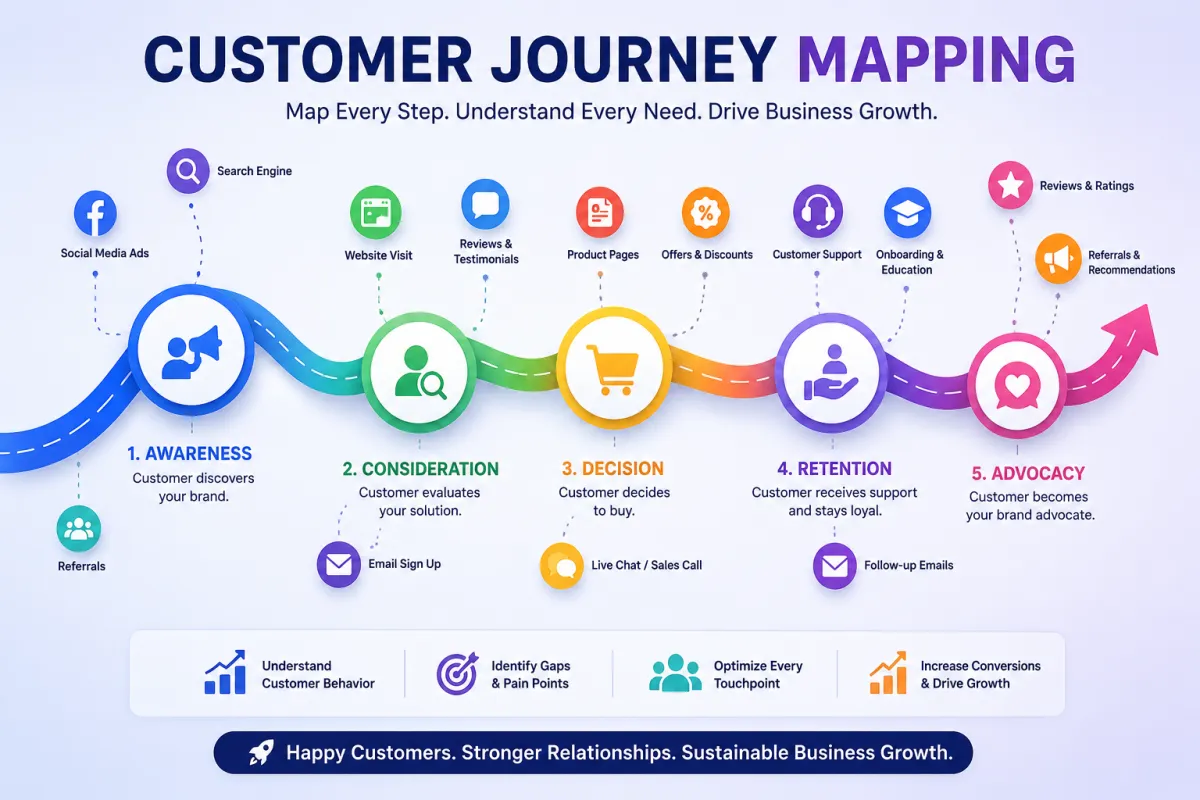
Stages of a Customer Journey
1. Awareness Stage
The customer discovers your brand through:
-
Social media
-
Ads
-
SEO
-
Referrals
Goal: attract attention and build awareness.
2. Consideration Stage
The customer evaluates your solution.
They may:
-
Visit your website
-
Read reviews
-
Compare competitors
Goal: build trust and provide value.
3. Decision Stage
The customer is ready to buy.
They need:
-
Offers
-
Testimonials
-
Clear pricing
Goal: convert leads into customers.
4. Retention Stage
After purchase, customers need support.
This includes:
-
Onboarding
-
Support
-
Follow-ups
Goal: increase satisfaction and repeat business.
5. Advocacy Stage
Satisfied customers become brand promoters.
They:
-
Leave reviews
-
Refer others
-
Share experiences
Goal: turn customers into advocates.
How to Create a Customer Journey Map
Step 1: Define Customer Personas
Understand who your customers are, including their needs and goals.
Step 2: Identify Touchpoints
List all interactions customers have with your brand.
Step 3: Analyze Customer Behavior
Use data to understand actions at each stage.
Step 4: Identify Pain Points
Find where customers face challenges or drop off.
Step 5: Optimize Each Stage
Improve messaging, design, and processes.
Tools for Customer Journey Mapping
Businesses can use tools such as:
-
CRM platforms like GoHighLevel
-
Google Analytics
-
Hotjar
-
HubSpot
-
Microsoft Clarity
These tools help track customer behavior and optimize journeys.
Common Mistakes in Journey Mapping
-
Ignoring real customer data
-
Creating overly complex maps
-
Not updating journey maps regularly
-
Failing to align teams
-
Focusing only on acquisition, not retention
The Future of Customer Journey Mapping in 2026
Customer journey mapping is becoming more advanced with:
-
AI-powered behavior analysis
-
Predictive customer journeys
-
Real-time personalization
-
Automated CRM workflows
-
Multi-channel tracking
Businesses that adopt these technologies will gain a strong competitive advantage.