A Complete Guide to A2P 10DLC Registration for Businesses in 2026
Introduction
Text messaging has become one of the most effective communication channels for businesses. Whether sending appointment reminders, order updates, verification codes, promotional offers, or customer support notifications, SMS provides fast and direct communication with customers.
However, as business messaging increased, mobile carriers experienced growing issues with spam, phishing, and fraudulent text messages. To improve trust and protect consumers, the telecommunications industry introduced A2P 10DLC, a messaging framework designed specifically for legitimate business communication.
Today, businesses that send application-to-person (A2P) messages using standard 10-digit local phone numbers are generally expected to register their brand and messaging campaigns before sending business-related SMS traffic.
Understanding A2P 10DLC registration is essential for businesses that rely on text messaging to communicate with customers. Proper registration improves message delivery, increases trust, and helps ensure compliance with carrier requirements.
What Is A2P 10DLC?
A2P stands for Application-to-Person, while 10DLC refers to a standard 10-digit long code phone number used for business messaging.
Unlike traditional personal texting, A2P messaging is generated automatically by software platforms, customer relationship management systems, scheduling applications, or marketing automation tools.
Examples include:
-
Appointment reminders
-
Delivery notifications
-
Verification codes
-
Customer support updates
-
Payment reminders
-
Marketing promotions
-
Account alerts
-
Order confirmations
A2P 10DLC allows businesses to use familiar local phone numbers while following industry-approved messaging standards.
Why A2P 10DLC Registration Is Required
The primary purpose of A2P 10DLC registration is to reduce spam and improve trust in business messaging.
Before registration requirements were introduced, carriers had limited visibility into who was sending automated text messages. This made it easier for fraudulent senders to misuse messaging systems. Registration helps carriers identify legitimate businesses and monitor messaging campaigns.
Benefits of registration include:
-
Better message delivery
-
Reduced message filtering
-
Increased customer trust
-
Improved carrier transparency
-
Better protection against spam
-
More reliable communication
Businesses that register demonstrate that they follow approved messaging practices and comply with industry standards.
How A2P 10DLC Works
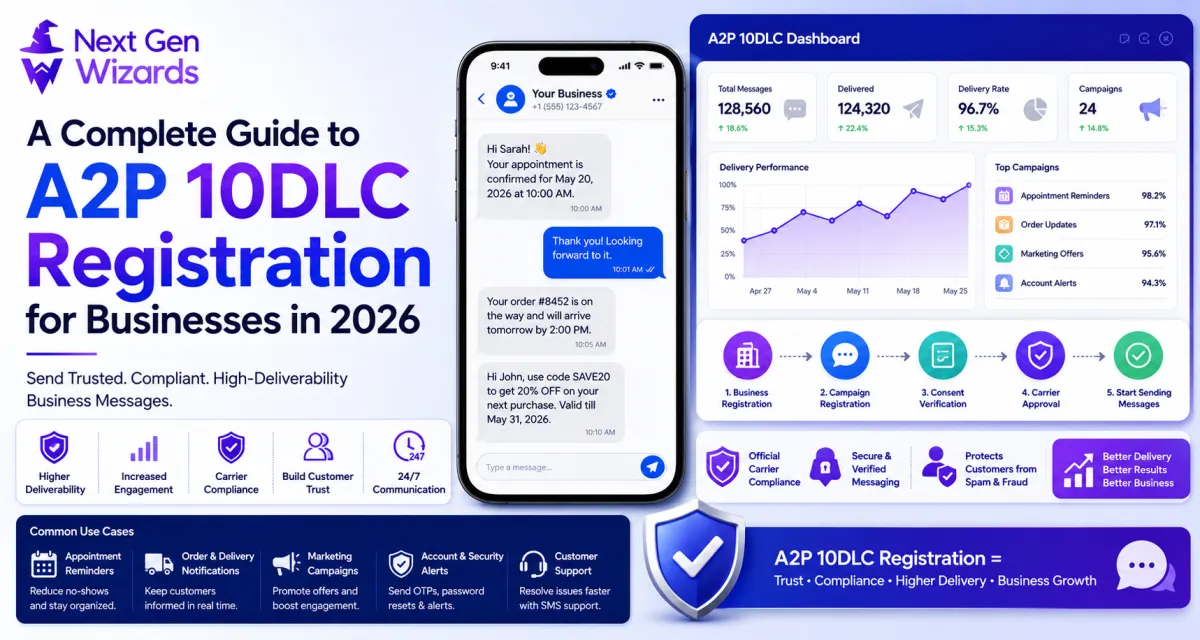
A2P 10DLC operates through a registration process that connects a business, its messaging campaigns, and its phone numbers.
The process generally involves:
-
Registering the business or brand.
-
Submitting information about messaging use cases.
-
Reviewing campaign details.
-
Receiving approval from messaging providers and carriers.
-
Associating approved phone numbers with registered campaigns.
Once approved, businesses can send compliant SMS messages with improved deliverability and appropriate messaging throughput. This system helps carriers distinguish legitimate business communication from unwanted or fraudulent messaging.
Who Needs A2P 10DLC Registration?
Most organizations using software to send automated text messages through standard local phone numbers should complete A2P 10DLC registration.
Examples include:
-
Marketing agencies
-
Healthcare providers
-
Dental clinics
-
Real estate companies
-
Financial services
-
Educational institutions
-
Retail businesses
-
Restaurants
-
Fitness centers
-
Home service companies
-
Automotive businesses
-
Law firms
-
Insurance agencies
Any organization sending recurring business-related SMS messages through automation platforms should determine whether A2P 10DLC registration applies to its messaging activities.
The A2P 10DLC Registration Process
Although registration procedures vary slightly between service providers, the overall process follows similar steps.
Step 1: Register Your Business
Businesses submit basic organizational information, including legal business details and identification information when required.
Accurate information is important because carriers use it to verify the legitimacy of the business.
Step 2: Register Your Messaging Campaign
After brand verification, businesses describe how they intend to use SMS messaging.
Examples include:
-
Appointment reminders
-
Customer notifications
-
Marketing campaigns
-
Two-factor authentication
-
Customer support
-
Account updates
The campaign description should accurately reflect actual messaging practices.
Step 3: Verify Customer Consent
Businesses must demonstrate that customers have agreed to receive text messages.
Consent may be collected through:
-
Online forms
-
Website checkboxes
-
Paper forms
-
Appointment scheduling
-
Customer sign-up pages
-
Mobile applications
Maintaining proper consent records helps support compliance.
Step 4: Receive Campaign Approval
Carriers review submitted information before approving messaging campaigns. Approval times vary depending on registration accuracy and review processes. Once approved, businesses can begin sending registered SMS traffic.
Types of Messaging Campaigns
Different businesses use SMS for different purposes.
Common messaging campaigns include:
Customer Care
These messages support existing customers by providing useful information such as appointment confirmations, account updates, and service notifications.
Marketing
Marketing campaigns promote products, services, discounts, seasonal offers, and special announcements. Marketing messages generally require clear customer consent before sending.
Account Notifications
Businesses use account notifications to provide billing updates, security alerts, payment confirmations, and service changes.
Verification Messages
Verification campaigns send one-time passwords (OTPs), login verification codes, and identity confirmation messages. These messages are commonly used by banks, software companies, and online service providers.
Benefits of A2P 10DLC Registration
Completing registration provides several advantages beyond regulatory compliance.
Improved Message Deliverability
Registered campaigns are less likely to be filtered or blocked by mobile carriers.
Greater Customer Trust
Customers are more likely to engage with messages from verified business senders.
Better Messaging Performance
Registered campaigns typically support higher messaging throughput compared to unregistered traffic.
Reduced Risk of Carrier Blocking
Following approved messaging practices reduces the likelihood of carrier restrictions.
Stronger Brand Reputation
Verified business communication demonstrates professionalism and commitment to responsible messaging.
Compliance Requirements
Businesses should follow several important compliance principles when using A2P 10DLC messaging.
-
Always obtain customer consent before sending business text messages.
-
Clearly identify your business within messages whenever appropriate.
-
Provide straightforward methods for customers to stop receiving messages.
-
Avoid misleading, deceptive, or fraudulent content.
-
Send messages only for approved campaign purposes.
-
Respect customer privacy and protect personal information.
-
Maintain accurate records of customer consent and communication preferences.
-
Following these practices helps build trust while reducing compliance risks.
Common Registration Mistakes
Many businesses experience registration delays because of avoidable errors.
Common mistakes include:
-
Providing inaccurate business information
-
Submitting incomplete registration details
-
Choosing incorrect campaign types
-
Sending messages before approval
-
Failing to obtain customer consent
-
Using misleading campaign descriptions
-
Ignoring messaging compliance requirements
-
Sending excessive promotional messages
Reviewing registration information carefully before submission helps reduce approval delays.
Best Practices for Business SMS Messaging
Successful SMS communication focuses on customer value rather than message volume.
Businesses should:
-
Obtain clear customer consent.
-
Send only relevant messages.
-
Keep text messages concise.
-
Maintain consistent branding.
-
Respect customer preferences.
-
Avoid excessive messaging frequency.
-
Monitor delivery performance.
-
Update customer contact information regularly.
Responsible messaging practices improve engagement while strengthening long-term customer relationships.
Frequently Asked Questions
What does A2P 10DLC mean?
A2P stands for Application-to-Person messaging, while 10DLC refers to a standard 10-digit long code used by businesses for automated SMS communication.
Why is A2P 10DLC registration important?
Registration helps improve message delivery, supports carrier compliance, reduces spam, and increases trust in business text messaging.
Which businesses need A2P 10DLC registration?
Businesses that use software platforms to send automated SMS messages through local phone numbers should generally complete registration if their messaging falls within A2P use cases.
Do customers need to give permission before receiving business text messages?
Yes. Businesses should obtain appropriate customer consent before sending business-related SMS messages and maintain records of that consent.
What types of messages can businesses send after registration?
Businesses commonly send appointment reminders, order updates, customer support notifications, verification codes, payment reminders, account alerts, and marketing messages that align with their approved campaign type.
Conclusion
A2P 10DLC registration has become an essential part of responsible business text messaging. By registering their brand and messaging campaigns, organizations can improve message deliverability, strengthen customer trust, and support compliance with carrier requirements. Understanding the registration process, obtaining proper customer consent, selecting the correct campaign type, and following messaging best practices help businesses create reliable and effective SMS communication strategies. As mobile messaging continues to play a central role in customer engagement, maintaining compliant and transparent messaging practices remains an important part of long-term business success.