How AI Chatbots Improve Lead Conversion Rates in 2026
Table of Contents
-
Introduction
-
What Are AI Chatbots?
-
Why Lead Conversion Matters
-
Instant Customer Engagement
-
Qualifying Leads Automatically
-
Providing 24/7 Customer Support
-
Personalized Customer Conversations
-
Reducing Response Times
-
Automating Appointment Scheduling
-
Supporting Sales Teams
-
Collecting Valuable Customer Data
-
Best Practices for AI Chatbots
-
Frequently Asked Questions
-
Conclusion
Introduction
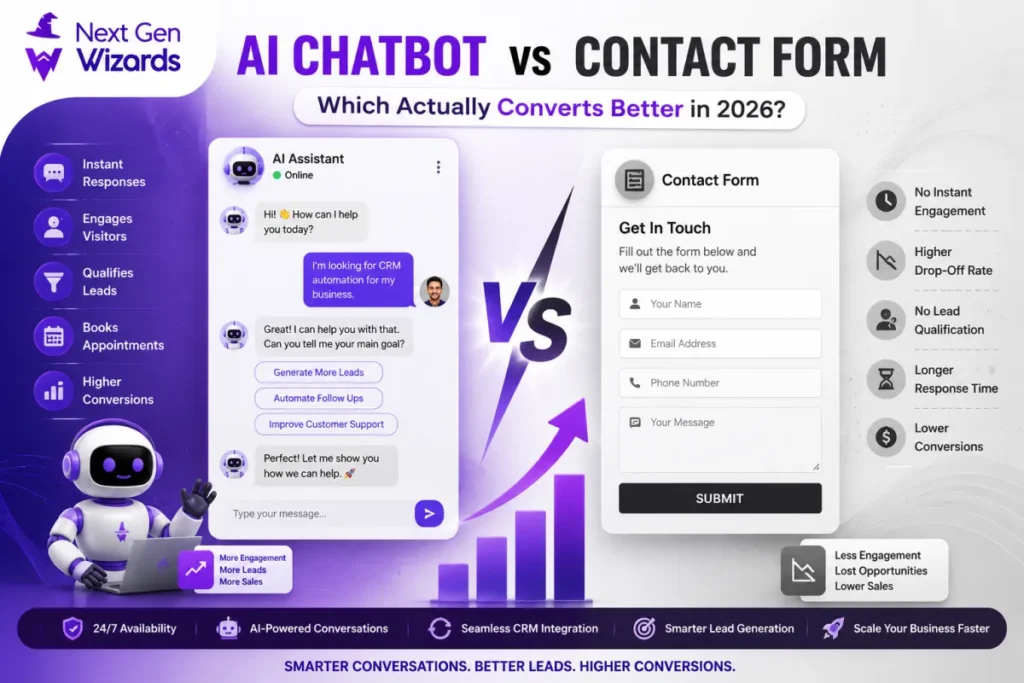
Generating leads is an important part of business growth, but converting those leads into paying customers is often the biggest challenge. Many businesses invest heavily in advertising, search engine optimization, and social media marketing to attract visitors, only to lose potential customers because of delayed responses or inconsistent communication.
Modern customers expect quick answers. If they have to wait hours or even minutes for a response, they may leave the website and choose a competitor instead. This is where AI chatbots have become an essential business tool.
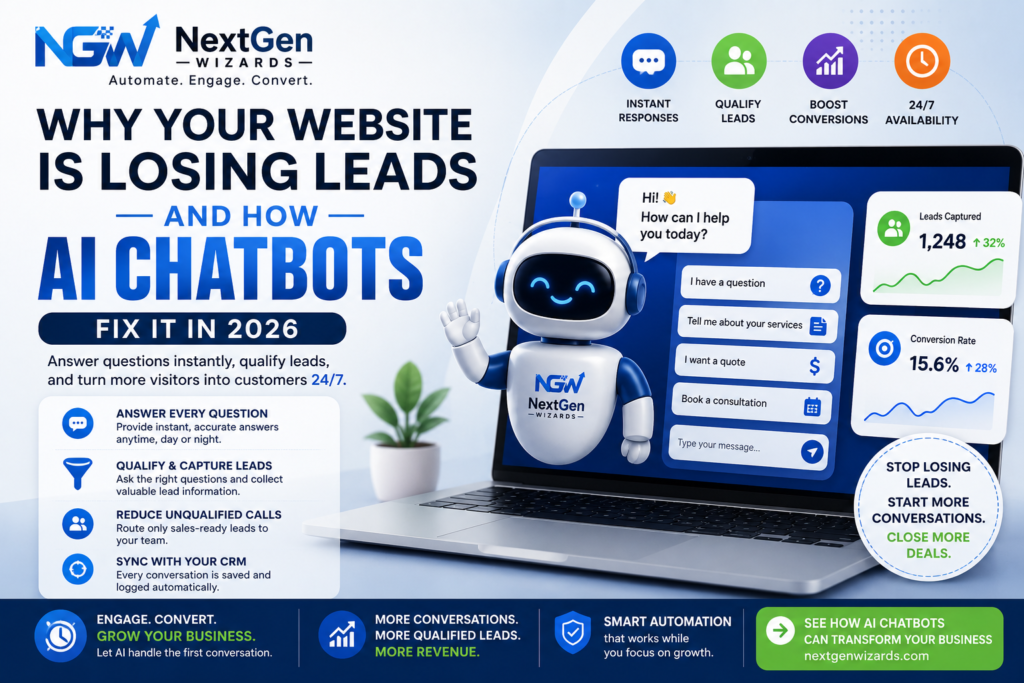
AI chatbots provide instant conversations with website visitors, answer common questions, qualify leads, schedule appointments, and guide customers through the buying journey. Unlike traditional chat systems that rely on predefined scripts, modern AI chatbots understand natural language and respond intelligently based on customer intent.
Businesses across industries are using AI chatbots to improve customer engagement, increase efficiency, and convert more website visitors into qualified leads.
What Are AI Chatbots?
AI chatbots are software applications powered by artificial intelligence that communicate with users through text-based conversations.
Unlike basic rule-based chatbots, AI chatbots understand context, recognize customer intent, and generate more natural responses.
They can perform tasks such as:
-
Answering customer questions
-
Collecting contact information
-
Scheduling appointments
-
Recommending products or services
-
Providing customer support
-
Qualifying leads
-
Directing inquiries to the correct department
These capabilities allow businesses to provide fast and consistent communication without requiring human intervention for every interaction.
Why Lead Conversion Matters
Lead generation alone does not guarantee business growth. The true measure of marketing success is how many leads become paying customers. Poor communication, slow response times, and complicated customer journeys often reduce conversion rates.
Improving lead conversion helps businesses:
-
Increase revenue
-
Lower customer acquisition costs
-
Improve marketing return on investment
-
Build stronger customer relationships
-
Maximize existing traffic
AI chatbots support these goals by engaging visitors immediately and guiding them toward the next step.
Instant Customer Engagement
The first few moments after a visitor arrives on a website are critical. If visitors cannot quickly find answers to their questions, many leave without taking action.
AI chatbots greet visitors instantly and begin conversations based on customer behavior.
Examples include:
-
Offering assistance
-
Answering questions
-
Recommending resources
-
Explaining services
-
Guiding navigation
Immediate engagement reduces bounce rates while encouraging visitors to remain on the website longer.
Qualifying Leads Automatically
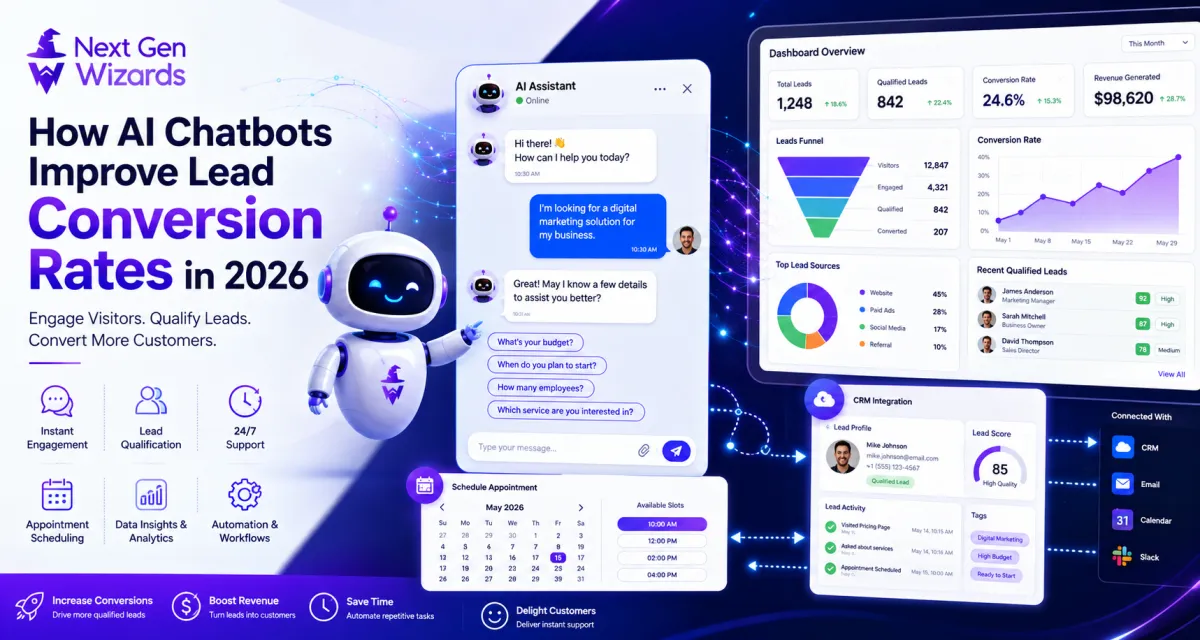
Not every website visitor is ready to purchase.Sales teams benefit from focusing their attention on qualified prospects. AI chatbots automatically collect information that helps determine lead quality.
Typical questions include:
-
What service are you looking for?
-
What is your budget?
-
When do you plan to begin?
-
What industry are you in?
-
How many employees does your company have?
Based on customer responses, chatbots can categorize leads and direct high-priority opportunities to the sales team. This improves efficiency while reducing time spent on unqualified inquiries.
Providing 24/7 Customer Support
Customers visit business websites at all hours. Businesses operating only during standard office hours often miss valuable opportunities. AI chatbots remain available around the clock. Whether someone visits early in the morning, late at night, or during holidays, the chatbot can immediately assist.
Continuous availability helps businesses:
-
Capture more leads
-
Improve customer satisfaction
-
Reduce missed opportunities
-
Increase engagement
Round-the-clock support is especially valuable for businesses serving customers across multiple time zones.
Personalized Customer Conversations
Modern AI chatbots can personalize conversations using available customer information.
They may reference:
-
Customer names
-
Previous inquiries
-
Browsing history
-
Purchased services
-
Appointment history
-
Account information
Personalized conversations create more engaging customer experiences than generic automated responses. Customers appreciate businesses that recognize their individual needs.
Reducing Response Times
Response time significantly influences customer satisfaction. Waiting several hours for an email response often results in lost sales opportunities. AI chatbots provide answers within seconds.
They can immediately respond to common questions regarding:
-
Pricing
-
Services
-
Availability
-
Business hours
-
Appointment scheduling
-
Contact information
Quick responses improve customer confidence while increasing the likelihood of continued engagement.
Automating Appointment Scheduling
Many businesses require consultations before making sales. AI chatbots simplify appointment scheduling by connecting directly with business calendars.
Customers can:
-
View available time slots
-
Schedule appointments
-
Receive confirmations
-
Reschedule meetings
-
Cancel appointments
Automation reduces administrative work while making the booking process more convenient. Confirmation messages and reminders also help reduce missed appointments.
Supporting Sales Teams
AI chatbots do not replace sales professionals. Instead, they improve sales efficiency by handling repetitive tasks.
Chatbots assist sales teams by:
-
Collecting customer information
-
Qualifying prospects
-
Recording conversations
-
Scheduling appointments
-
Answering common questions
-
Routing inquiries
Sales representatives receive better-prepared leads, allowing them to focus on relationship building and closing opportunities. This collaboration improves overall sales performance.
Collecting Valuable Customer Data
Every chatbot conversation provides useful business insights.
Businesses can analyze conversations to identify:
-
Frequently asked questions
-
Common customer concerns
-
Popular services
-
Purchasing trends
-
Customer preferences
-
Lead sources
These insights support better marketing strategies, product improvements, and customer service enhancements. Data-driven decisions often lead to stronger conversion performance over time.
Best Practices for AI Chatbots
Implementing AI chatbots successfully requires thoughtful planning.
Businesses should:
-
Define clear chatbot objectives.
-
Use natural conversational language.
-
Keep conversations simple.
-
Provide easy access to human support when needed.
-
Regularly update chatbot knowledge.
-
Monitor customer interactions.
-
Review chatbot performance regularly.
Balancing automation with human assistance creates the best overall customer experience.
Frequently Asked Questions
What is an AI chatbot?
An AI chatbot is a software application that uses artificial intelligence to communicate with customers, answer questions, qualify leads, and automate business interactions through natural conversations.
Can AI chatbots improve lead conversion?
Yes. AI chatbots engage visitors instantly, answer questions, qualify prospects, automate follow-ups, and guide customers through the buying process, all of which contribute to higher lead conversion rates.
Are AI chatbots available 24/7?
Yes. AI chatbots operate continuously, allowing businesses to provide customer assistance outside normal business hours.
Can AI chatbots schedule appointments?
Yes. Many AI chatbots integrate with business calendars, enabling customers to book, reschedule, or cancel appointments through automated conversations.
Do AI chatbots replace sales representatives?
No. AI chatbots handle repetitive communication and lead qualification, while sales representatives focus on personalized conversations, complex inquiries, and closing sales.
Conclusion
AI chatbots have become an essential tool for businesses seeking to improve lead conversion rates and enhance customer engagement. By providing instant responses, qualifying leads, offering 24/7 assistance, personalizing conversations, automating appointment scheduling, and supporting sales teams, they help create a smoother and more efficient customer journey. When implemented effectively, AI chatbots reduce response times, improve operational efficiency, and allow businesses to focus human expertise where it delivers the greatest value. As customer expectations continue to evolve, AI-powered conversational technology will remain an important component of successful lead generation and conversion strategies.