The Future of AI Automation for Small Businesses
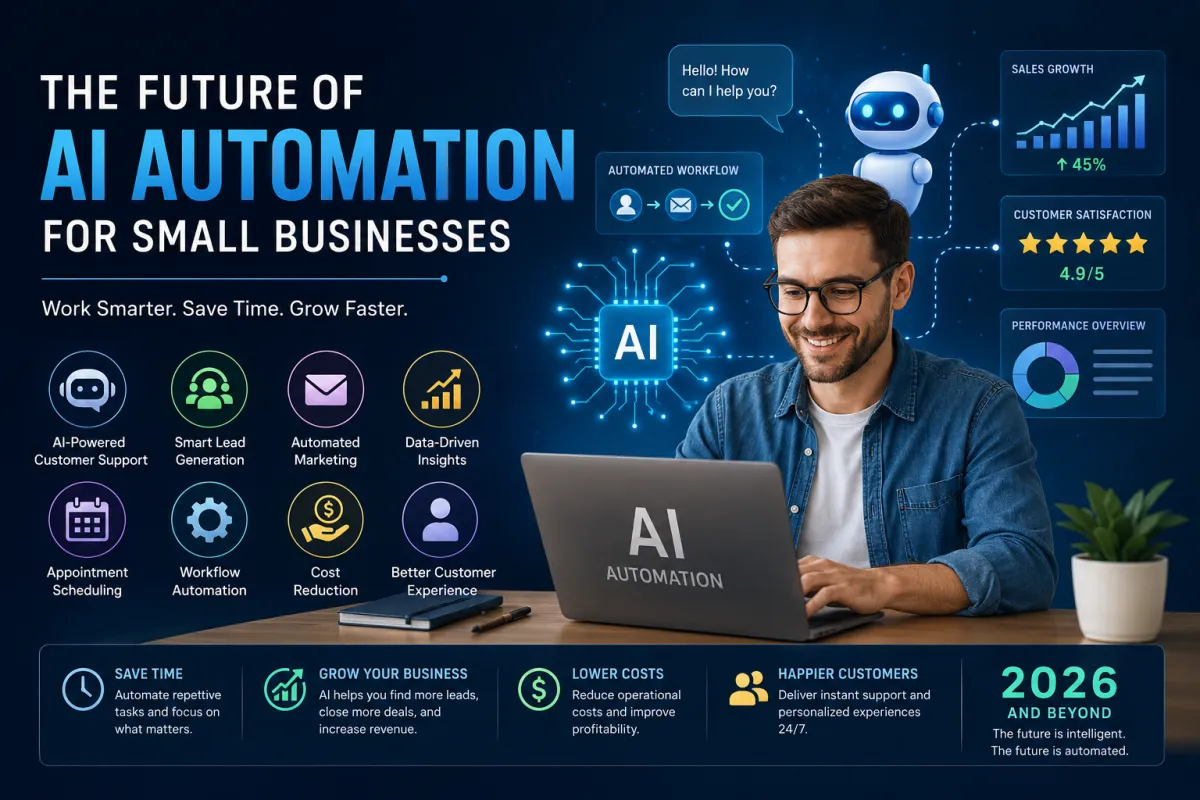
In 2026, artificial intelligence (AI) is no longer a luxury reserved for large enterprises. It has become a core part of how small businesses operate, compete, and grow. From customer service chatbots to automated marketing campaigns and smart CRM systems, AI automation is reshaping how small businesses manage daily operations and generate revenue.
Small businesses that once struggled with limited staff, tight budgets, and time constraints now have access to powerful AI-driven tools that can automate repetitive tasks, improve decision-making, and enhance customer experience.
In this guide, we will explore the future of AI automation for small businesses, how it is transforming industries, and why adopting it is essential for long-term success.
What Is AI Automation?
AI automation refers to the use of artificial intelligence technologies to perform tasks automatically without constant human intervention.
Unlike traditional automation, which follows fixed rules, AI automation can learn, adapt, and improve over time.
It can handle tasks such as:
-
Customer support responses
-
Email and SMS marketing
-
Lead qualification
-
Appointment scheduling
-
Sales follow-ups
-
Data analysis and reporting
-
Content generation
By combining AI with automation workflows, small businesses can operate more efficiently and intelligently.
Why AI Automation Matters for Small Businesses in 2026
Small businesses face several challenges:
-
Limited workforce
-
High operational costs
-
Increasing competition
-
Customer expectations for instant responses
-
Need for consistent marketing
AI automation solves these problems by allowing businesses to do more with less.
Instead of hiring large teams, small businesses can use AI-powered systems to handle repetitive tasks, freeing up time for strategy and growth.
1. AI Will Transform Customer Communication
One of the biggest changes AI brings is in customer communication. In the past, businesses relied on manual replies and support teams. Today, AI-powered chatbots and messaging systems can handle most customer interactions instantly.
AI can:
-
Answer frequently asked questions
-
Provide product recommendations
-
Handle booking requests
-
Resolve basic support issues
-
Escalate complex problems to human agents
This ensures customers receive instant responses 24/7.
2. AI Will Improve Lead Generation and Sales
AI automation is changing how small businesses generate and convert leads.
Instead of manually tracking leads, AI systems can:
-
Score leads based on behavior
-
Identify high-intent prospects
-
Send personalized follow-ups
-
Predict buying probability
For example, when a visitor fills out a form, AI can instantly determine their level of interest and trigger the right follow-up sequence.
This improves conversion rates and reduces wasted effort on low-quality leads.
3. AI Will Power Hyper-Personalized Marketing
Generic marketing messages are becoming less effective.
Customers expect personalized experiences.
AI helps small businesses deliver personalized marketing by:
-
Analyzing customer behavior
-
Segmenting audiences automatically
-
Creating tailored email and SMS campaigns
-
Recommending products based on preferences
For example, an eCommerce store can use AI to suggest products based on past purchases and browsing behavior. This increases engagement and sales.
4. AI Will Automate Social Media Management
Managing social media can be time-consuming for small businesses.
AI tools can now:
-
Generate content ideas
-
Schedule posts automatically
-
Analyze engagement metrics
-
Suggest optimal posting times
-
Respond to comments and messages
This allows businesses to maintain a strong online presence without spending hours every day on social media.
5. AI Will Enhance CRM Systems
Customer Relationship Management (CRM) systems are becoming smarter with AI integration.
Modern AI-powered CRMs can:
-
Track customer interactions across channels
-
Predict customer behavior
-
Automate follow-ups
-
Suggest next best actions
-
Identify upsell opportunities
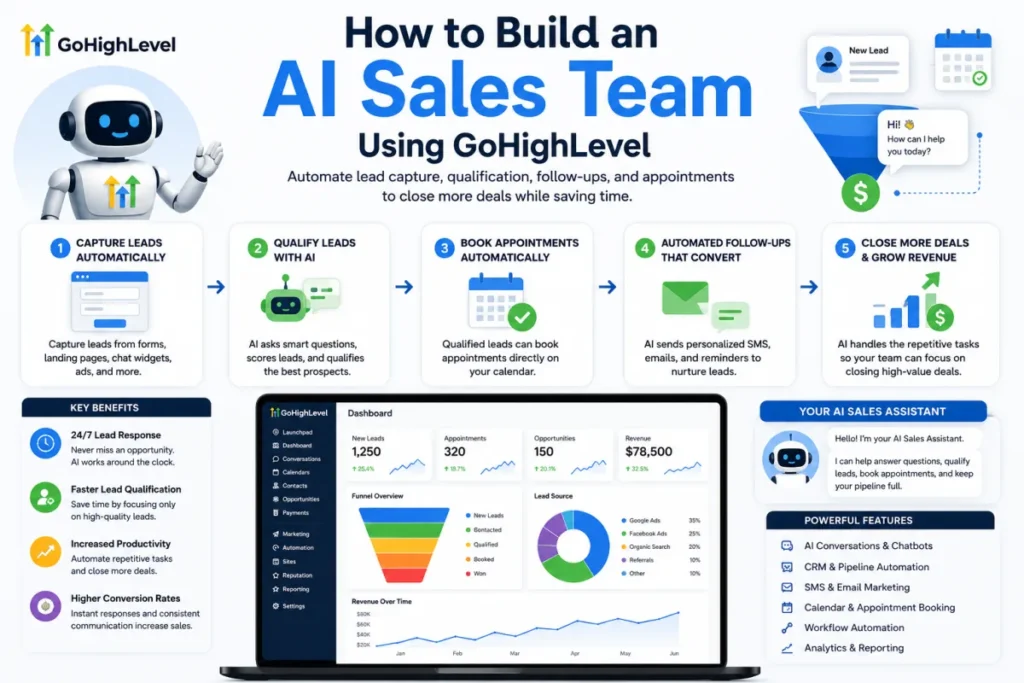
For example, platforms like GoHighLevel are integrating AI to streamline workflows and improve sales efficiency.
6. AI Will Reduce Operational Costs
One of the most important benefits of AI automation is cost reduction.
Small businesses can reduce expenses by:
-
Automating customer support
-
Reducing manual data entry
-
Minimizing marketing workload
-
Optimizing resource allocation
Instead of hiring multiple employees for repetitive tasks, businesses can rely on AI systems to handle them efficiently.
7. AI Will Improve Decision Making
AI systems can analyze large amounts of data quickly and accurately.
This helps business owners make better decisions based on real insights rather than guesswork.
AI can provide insights such as:
-
Which marketing campaigns perform best
-
Which products generate the most revenue
-
Which customers are likely to churn
-
Which channels bring the highest ROI
This leads to smarter, data-driven business strategies.
8. AI Will Strengthen Customer Retention
Retaining customers is more cost-effective than acquiring new ones.
AI helps businesses improve retention by:
-
Sending personalized follow-ups
-
Offering loyalty rewards
-
Predicting churn risk
-
Re-engaging inactive customers
For example, if a customer has not purchased in a while, AI can automatically send a discount or reminder message.
9. AI Will Power Voice and Conversational Interfaces
Voice assistants and conversational AI are becoming more common.
Customers can now:
-
Book appointments using voice commands
-
Ask questions through chatbots
-
Receive instant spoken responses
This makes interactions faster and more convenient.
10. AI Will Enable 24/7 Business Operations
With AI automation, small businesses no longer need to operate only during working hours.
AI systems can:
-
Respond to inquiries instantly
-
Process orders automatically
-
Schedule appointments
-
Send notifications
This ensures continuous business operations without human presence.
Key AI Automation Tools for Small Businesses
1. GoHighLevel
An all-in-one CRM and automation platform designed for agencies and small businesses.
2. HubSpot AI
Provides AI-powered marketing, sales, and CRM automation.
3. Zapier
Connects multiple apps and automates workflows.
4. ChatGPT-based Tools
Used for content creation, customer support, and marketing assistance.
5. Shopify AI
Helps eCommerce stores automate product recommendations and customer engagement.
Challenges of AI Automation
Despite its benefits, AI automation also comes with challenges:
-
Initial setup complexity
-
Data privacy concerns
-
Learning curve for business owners
-
Over-reliance on automation
-
Integration issues between tools
However, these challenges can be managed with proper planning and training.
Best Practices for Implementing AI Automation
To succeed with AI automation, small businesses should:
-
Start with simple workflows
-
Focus on high-impact tasks first
-
Regularly monitor performance
-
Combine AI with human oversight
-
Continuously optimize processes
The Future of AI Automation in 2026 and Beyond
The future of AI automation is extremely promising.
We can expect:
-
Fully autonomous business systems
-
AI-driven marketing agencies
-
Predictive customer journey automation
-
Real-time personalization at scale
-
Smarter AI assistants for business operationsSmall businesses that adopt AI early will gain a significant competitive advantage over those that delay.